SodaTide Official Website › Blog › Pregnancy, Breastfeeding And The Label
Pregnancy, Breastfeeding And SodaTide's Three Ingredients: What The Safety Data Does And Doesn't Cover
The who-it's-for page on this site gives pregnancy and nursing one sentence: show the label to a doctor first. That is the right answer. This article sets out the published safety literature behind it, ingredient by ingredient, so the reason for that sentence is visible rather than assumed.
- A review of the probiotic pregnancy literature found several randomized trials in the third trimester with no reported increase in adverse fetal outcomes, and concluded probiotics are unlikely to transfer into breast milk.
- That review is about named strains studied in named amounts. SodaTide's probiotic blend names neither, so the reassurance does not automatically transfer to this bottle.
- This site could not find a published trial that gave isolated chicory inulin or potato resistant starch to pregnant or breastfeeding volunteers and measured outcomes.
- A broader review of probiotic safety reporting found that clinical trials inconsistently report safety outcomes at all, in any population.
- The label's own instruction — talk to a doctor before use if you take any medicine, and the seller's separate note to check with a doctor if pregnant or nursing — is doing real work here rather than covering for a lack of research.
The one sentence, and why it needs unpacking
This site's own page on who SodaTide suits handles pregnancy and nursing in a single line, on purpose: a caution repeated in every section of a page stops being a caution and becomes background noise, so it appears once and is meant to be read as instruction rather than boilerplate. That is a reasonable editorial choice. It is also, by itself, not an explanation of why the instruction exists, and a reader who wants to know what “ask a doctor first” is standing in for deserves more than a restatement of the same sentence.
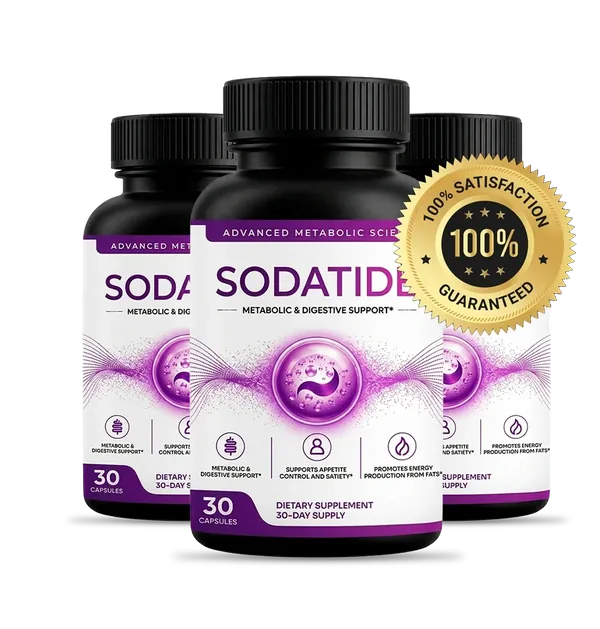
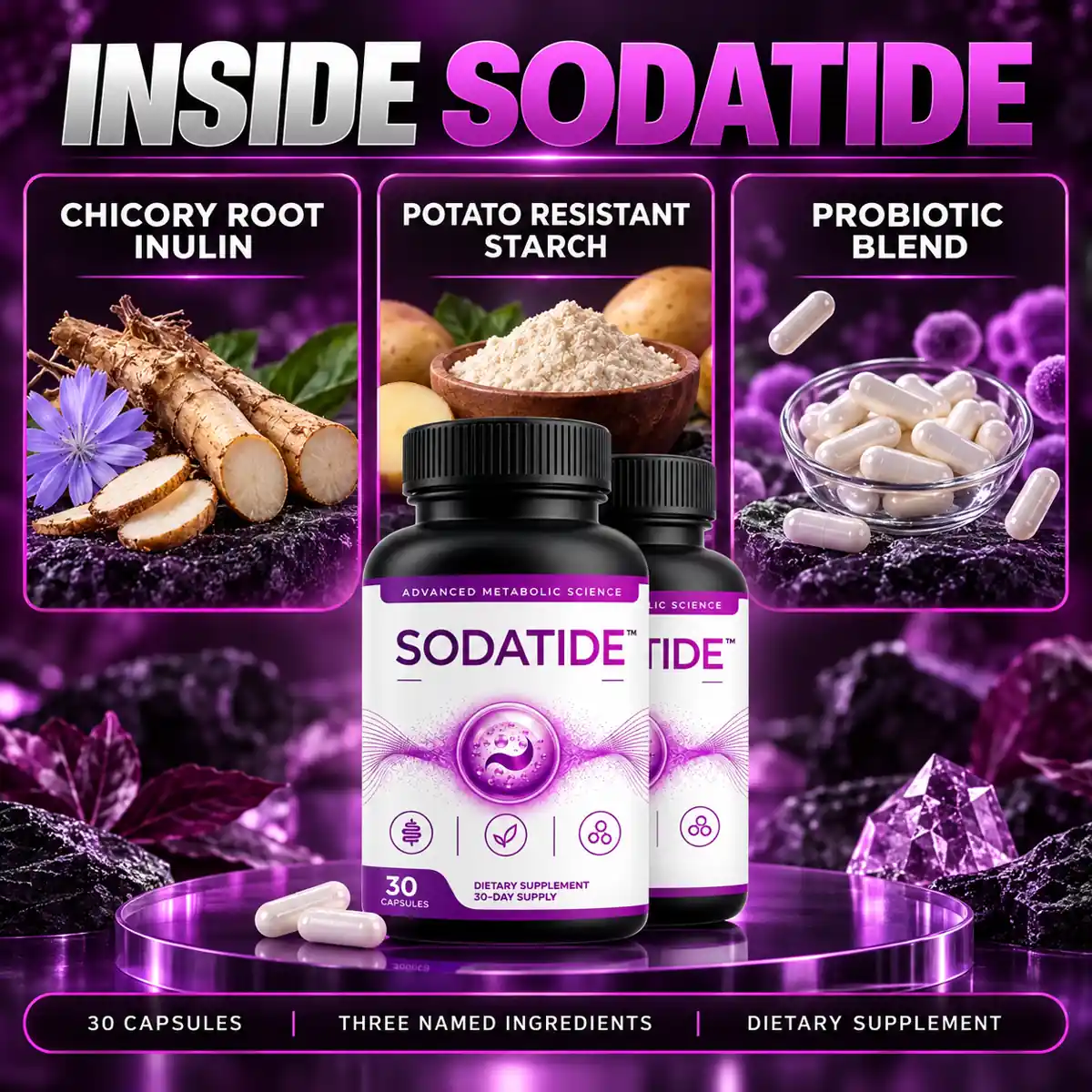
The honest answer has three parts, because the bottle has three named ingredients and the safety literature treats them very differently. Chicory root inulin and potato resistant starch are food-derived fermentable carbohydrates with almost no dedicated pregnancy or lactation trial data. The probiotic blend sits in a different position: there is a real, if imperfect, body of safety research on probiotics in pregnancy and breastfeeding, but it was built on named organisms at stated doses, and the label in front of a reader names neither.
The two fibers: a literature that mostly isn't there
Searching the published literature for a randomized trial that gave isolated chicory inulin, oligofructose, or potato resistant starch to pregnant or breastfeeding volunteers and then measured a safety outcome does not turn up one. That is a statement about what this site could not find rather than proof that no such study exists anywhere, but it matches a pattern that recurs across this label: the ingredients are well studied in general adult populations and thinly studied, if at all, in this specific one.
What does exist is the general fiber safety picture from non-pregnant adults, covered elsewhere on this blog in detail: doses from roughly 2.5 g up to 16 g a day of various inulin-type fructans and resistant starches, tested mostly for digestive tolerance and modest effects on weight and bacterial populations, none of it aimed at a pregnant or breastfeeding physiology specifically. Pregnancy changes gut motility, hormone levels and, in many people, baseline nausea and digestive sensitivity, none of which the fiber literature cited on this blog's dose article or its tolerance article was designed to account for.
There is also the fructan point specifically. Inulin is a fructan, and fructans are the “F” in FODMAP, a group of fermentable carbohydrates that a meaningful share of people restrict deliberately because they trigger digestive symptoms. Pregnancy is a period when digestive symptoms are already common for unrelated reasons, and stacking a new fermentable fiber source on top of that, at any dose, is the kind of change worth mentioning to whoever is managing a person's prenatal care — not because a specific trial says it is risky, but because no trial says anything about it either way, and a clinician following an individual's symptoms across a pregnancy is positioned to notice a change a label cannot anticipate.
Potato resistant starch does not carry the FODMAP fructan flag the same way, but it shares the fibre literature's general silence on pregnancy specifically. It is, at bottom, a starch that behaves like fiber because human digestive enzymes handle it poorly; the safety story for it in a general adult population is reassuring, and the safety story for it in pregnancy specifically has simply not been written yet, as far as this site's search could establish.
The probiotic blend: reassuring data that doesn't name what's in the bottle
Probiotics are the one ingredient category here with a real pregnancy and lactation literature behind them, and it is worth stating plainly what that literature says before explaining why it does not settle the question for this specific bottle. Elias, Bozzo and Einarson, writing for family physicians fielding exactly this question from pregnant patients, summarised the evidence this way: probiotic supplementation is rarely systemically absorbed when used by healthy individuals, one meta-analysis and several randomized controlled trials conducted with women in the third trimester of pregnancy did not report an increase in adverse fetal outcomes, and probiotics are unlikely to be transferred into breast milk. They also flagged a specific gap: no published studies had addressed Saccharomyces species — a yeast-based probiotic, distinct from the bacterial species usually meant by “probiotic” — in pregnancy at all.
That is about as reassuring as this category of evidence gets, and it deserves to be read as reassuring rather than dismissed. But it is reassuring about specific, named organisms studied at specific, stated doses in specific trial populations. The best-documented probiotic trial cited elsewhere on this site, for comparison, enrolled eighty-seven adults with a defined BMI and visceral fat range and gave them fermented milk containing a single named strain, Lactobacillus gasseri SBT2055, at a stated colony count, for twelve weeks. Pregnancy was not the population under study, the strain was named, and the dose was measured in colony-forming units per gram rather than left as “a blend.”
SodaTide's label says “probiotic blend” and names no genus, no species, no strain and no colony count at the end of shelf life. This site's earlier post on that exact gap makes the general case for why that matters for anyone trying to match the label to a trial; pregnancy is simply the sharpest version of that same argument, because the safety reassurance in the literature is keyed to identity in exactly the way the probiotic dose-response literature is keyed to identity for effectiveness. A reassuring safety review about probiotics in general is not the same statement as a reassuring safety review about the specific organisms in a bottle that does not say what they are.
Elias and colleagues note that no published study has looked at Saccharomyces-based probiotics in pregnancy at all. This label does not say whether its blend is bacterial, yeast-based, or both. That single unanswered question is enough on its own to make a label-only assessment impossible here.
The wider reporting gap in probiotic safety trials
Even setting pregnancy aside, the probiotic safety literature has a documented reporting problem that is worth knowing about before treating any single review as the final word. Doron and Snydman, reviewing risk and safety across the probiotic field, point to a 2011 Agency for Healthcare Research and Quality report that concluded existing probiotic clinical trials showed no evidence of increased risk, but that “the current literature is not well equipped to answer questions on the safety of probiotics in intervention studies with confidence.” Their own review lists the theoretical risks that have shown up in case reports and experimental models across the field generally: systemic infections, deleterious metabolic activity, excessive immune stimulation in susceptible individuals, gene transfer between organisms, and gastrointestinal side effects. The paper's own conclusion is not alarmist — it explicitly notes probiotics have been used safely for years — but it is candid that safety outcomes are inconsistently reported, which is a different claim from “proven safe in every population.”
That reporting gap matters more, not less, in pregnancy and lactation, precisely because it is a population where the standard of evidence needed for a confident yes is higher than for a healthy, non-pregnant adult trying a fiber capsule. The ISAPP consensus definition of a prebiotic makes a related point from the effectiveness side rather than the safety side: benefits and mechanisms are selective and strain- or substrate-specific, which is exactly why a general safety review of “probiotics” as a category cannot be read as a safety review of one particular, unnamed blend.
None of this is a claim that SodaTide's probiotic blend, its inulin or its resistant starch are unsafe in pregnancy or while breastfeeding. It is a claim that the specific trials needed to say so with confidence, for this specific unnamed blend and these two under-studied fibers, do not appear to exist yet. Absence of evidence is not evidence of harm, and it is not evidence of safety either.
What a conversation with a doctor can cover that a label can't
The seller's guidance to check with a doctor before use during pregnancy or breastfeeding is, on the evidence above, the correctly calibrated answer rather than a liability disclaimer dressed up as advice. A clinician managing an individual pregnancy has information a label never will: the person's own digestive history, medication list, trimester, and whether anything else in their diet already overlaps with a fermentable fiber load. A label printed once for every buyer cannot personalise any of that, and this literature review cannot either.
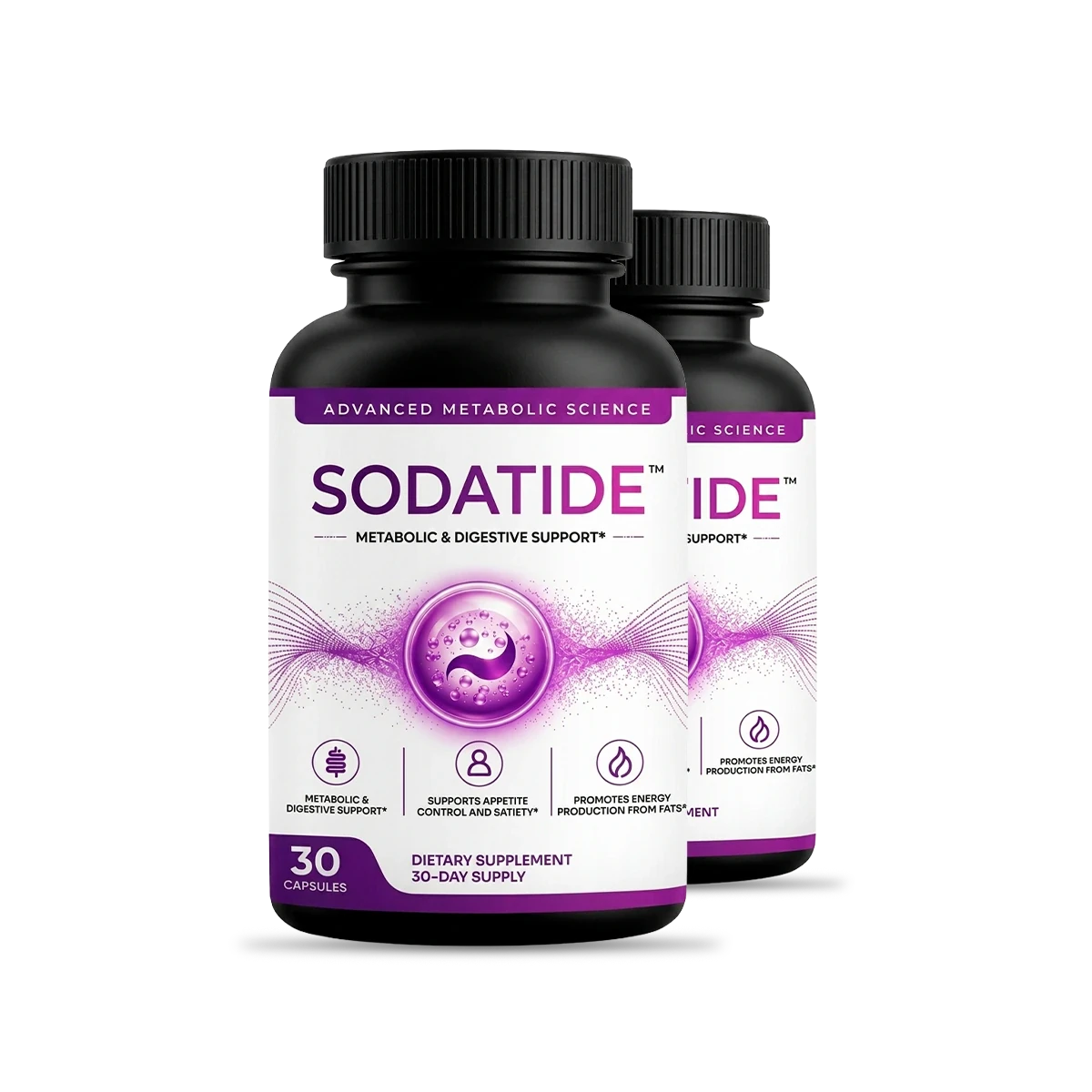
What a reader can usefully bring to that conversation, based on everything above, is a short and specific list rather than a vague question: that the bottle contains chicory root inulin (a fructan, and a FODMAP trigger for some people), potato resistant starch, and an unnamed probiotic blend described only as “three strains” on the seller's marketing page with none named on the label itself; that no dose is printed for any of the three; and that the safety literature located for this article covers named probiotic strains in pregnancy reasonably well, and covers the two fibers in pregnancy specifically not at all. That is a more useful starting point for a doctor's visit than “is this supplement safe,” because it hands over exactly where the evidence stops rather than asking someone else to go find that out from a bottle that does not say.
Read the ingredients page alongside this article
The ingredients page sets out what the label does and does not print for each of the three named ingredients, which is the starting point for the conversation this article recommends having with a doctor.
Order SodaTideOne capsule a morning · 30 per bottle
References
- Elias J, Bozzo P, Einarson A. Are probiotics safe for use during pregnancy and lactation? Can Fam Physician. 2011;57(3):299-301. PMID 21402964. https://pubmed.ncbi.nlm.nih.gov/21402964/
- Doron S, Snydman DR. Risk and safety of probiotics. Clin Infect Dis. 2015;60(Suppl 2):S129-34. PMID 25922398. https://pubmed.ncbi.nlm.nih.gov/25922398/
- Gibson GR, Hutkins R, Sanders ME, et al. Expert consensus document: The International Scientific Association for Probiotics and Prebiotics (ISAPP) consensus statement on the definition and scope of prebiotics. Nat Rev Gastroenterol Hepatol. 2017;14(8):491-502. PMID 28611480. https://pubmed.ncbi.nlm.nih.gov/28611480/
- Kadooka Y, Sato M, Imaizumi K, et al. Regulation of abdominal adiposity by probiotics (Lactobacillus gasseri SBT2055) in adults with obese tendencies in a randomized controlled trial. Eur J Clin Nutr. 2010;64(6):636-43. PMID 20216555. https://pubmed.ncbi.nlm.nih.gov/20216555/