SodaTide Official Website › Blog › Chicory Inulin And The Dose Question
Chicory Inulin: What The Trials Fed People, And What A Capsule Holds
Inulin is the best-evidenced prebiotic there is, and the evidence is almost entirely about grams. Five a day is the lowest dose that has changed anything; sixteen is where energy intake moved. A capsule holds a fraction of one.
- Inulin is a chain of fructose units that human enzymes cannot break, so it reaches the colon intact and is fermented there.
- 5 g a day for two weeks is the lowest dose shown to raise bifidobacteria in healthy adults.
- 16 g a day cut energy intake by 11% in one crossover; 10 g a day in the same study did not.
- A pooled analysis of 32 chicory inulin trials found reductions in weight, BMI, fat mass and waist circumference.
- A review of fifteen adult trials found eleven showing no effect on daily energy intake at all. Both of those statements are true.
What inulin actually is
A fructan is a polymer of fructose, and inulin is the best known one. Chicory builds it in the root across a growing season and draws on it through the winter, which is why the root rather than the leaf is what gets harvested for it. The link joining one fructose to the next is a beta bond, and nothing in the human small intestine will cut it, so the molecule arrives in the colon exactly as it was swallowed.
That is what makes it a prebiotic rather than merely a fibre. The ISAPP consensus definition has three clauses: a substrate that is selectively utilised by host microorganisms conferring a health benefit. The middle clause is the one doing the work. Bulk fibre adds mass; a prebiotic feeds particular organisms preferentially, and that selectivity has to be demonstrated rather than assumed.
One complication is worth knowing before reading any trial. “Inulin” covers a family of chain lengths, from short fructo-oligosaccharides to long-chain native inulin, and they do not behave identically. A study of one is not automatically a study of another, which is why the table below names what each trial actually used.
The dose evidence, trial by trial
| Trial | What it gave | For how long | What it found |
|---|---|---|---|
| Kolida 2007 | 5 g and 8 g a day of inulin | 2 weeks each | Both raised bifidobacteria; more volunteers responded at 8 g |
| Bouhnik 2004 | 2.5 to 10 g a day of seven different carbohydrates | 7 days | Four were bifidogenic; long-chain inulin was not one of them |
| Verhoef 2011 | 10 g and 16 g a day of oligofructose | 13 days | Energy intake fell 11% on the 16 g arm; the 10 g arm did not differ |
| Reimer 2024 | 32 trials of chicory inulin-type fructans, pooled | Varied | Reductions in weight, BMI, fat mass and waist circumference |
| Liber 2013 | 15 adult randomised trials, reviewed | Varied | Eleven found no effect on daily energy intake at all |
Doses and durations read from each paper's own abstract.
The second row is the one that complicates the story in a useful way. A study in 200 healthy volunteers screened seven nondigestible carbohydrates at 10 g a day for a week and then ran a dose-response phase at 2.5, 5, 7.5 and 10 g. Four of the seven raised faecal bifidobacteria: short-chain fructo-oligosaccharides, soybean oligosaccharides, galacto-oligosaccharides and type III resistant starch. Lactulose, long-chain inulin and isomalto-oligosaccharides did not.
So chain length matters, and a product that says “inulin” without saying which kind has left out a second variable on top of the missing quantity. The Kolida study did find an effect from inulin at 5 g and 8 g over two weeks rather than one, which is the more encouraging reading — but the two studies together show how narrow the conditions can be.
Read the SodaTide label comparison before ordering
The ingredients page sets all three named ingredients beside the dose their trials used, including every figure in this article. 60 days from purchase to change your mind.
Two bottles $158 · six bottles $294 · 60-day money-back guarantee
Order SodaTide On The Official WebsiteOne capsule a morning · 30 per bottle · lot SOD-26/SO-1226
Well evidenced and not dramatic
Two findings sit at opposite ends of the same literature and both are real. A 2024 meta-analysis pooled 32 randomised trials of chicory inulin-type fructans and found reductions in body weight, body mass index, total fat mass and waist circumference, with minimal evidence that dose, duration or the type of fructan changed the size of the effect.
An earlier systematic review looked at fifteen adult randomised trials and found five showing no effect on appetite sensations and eleven showing no effect on daily energy intake or on intake at a test meal. Three trials assessed body weight and two of those three found a reduction.
Neither review is wrong. They are describing a modest effect measured with different instruments: pooling many trials finds a small average change, while counting individual trials finds most of them underpowered to detect it. That is what a real but small effect looks like in a literature, and it is a long way from the way this ingredient class is usually sold.
Where the dose line sits
- One crossover gave 10 g and 16 g of oligofructose a day for thirteen days. The 16 g arm cut energy intake 11%; the 10 g arm did not differ.
- Six grams separated a result from no result in the same study, on the same people, in the same fortnight.
- That is the clearest single demonstration in this field that dose is not a detail.
- It is also the reason a label that prints no gram figure cannot be evaluated against any of this.
Four ways to get inulin, compared
| Form | Typical serving | What that gets you | What it costs you |
|---|---|---|---|
| Inulin powder | 5–10 g, one or two scoops | A dose that matches the trials, on a tub that prints the grams | A texture, a glass and a spoon, every day |
| Chicory root in food | Variable, rarely labelled | Fibre from food, which is what the population evidence is about | Cooking, and no way to know the quantity |
| A fibre capsule | Under half a gram of everything combined | Four seconds and a routine that survives a busy week | A quantity no trial has tested |
| A fibre gummy | Usually 1–3 g, often labelled | A printed gram figure and no texture problem | Added sugar or sweetener, and a higher price per gram |
No brand is named. The comparison is between forms of the same ingredient.
The trade in that table is the whole argument about capsules, stated in four rows. A powder gives you the dose and takes your time; a capsule gives you the routine and takes the dose. Neither is dishonest and neither is right for everybody.
The one form the evidence is most enthusiastic about is the one nobody sells: fibre from food, eaten in quantity, over years. Chicory is not a common ingredient in a Western kitchen, but onions, leeks, garlic, artichokes, beans and wholegrains all supply fermentable carbohydrate, and they supply it in grams rather than milligrams.
What a capsule can honestly do
It can add a small amount of a well-studied substrate to a diet that has almost none of it, every day, without anybody having to remember a scoop. For somebody whose fermentable fibre intake is close to zero, that is a real change in kind even if it is a small one in quantity.
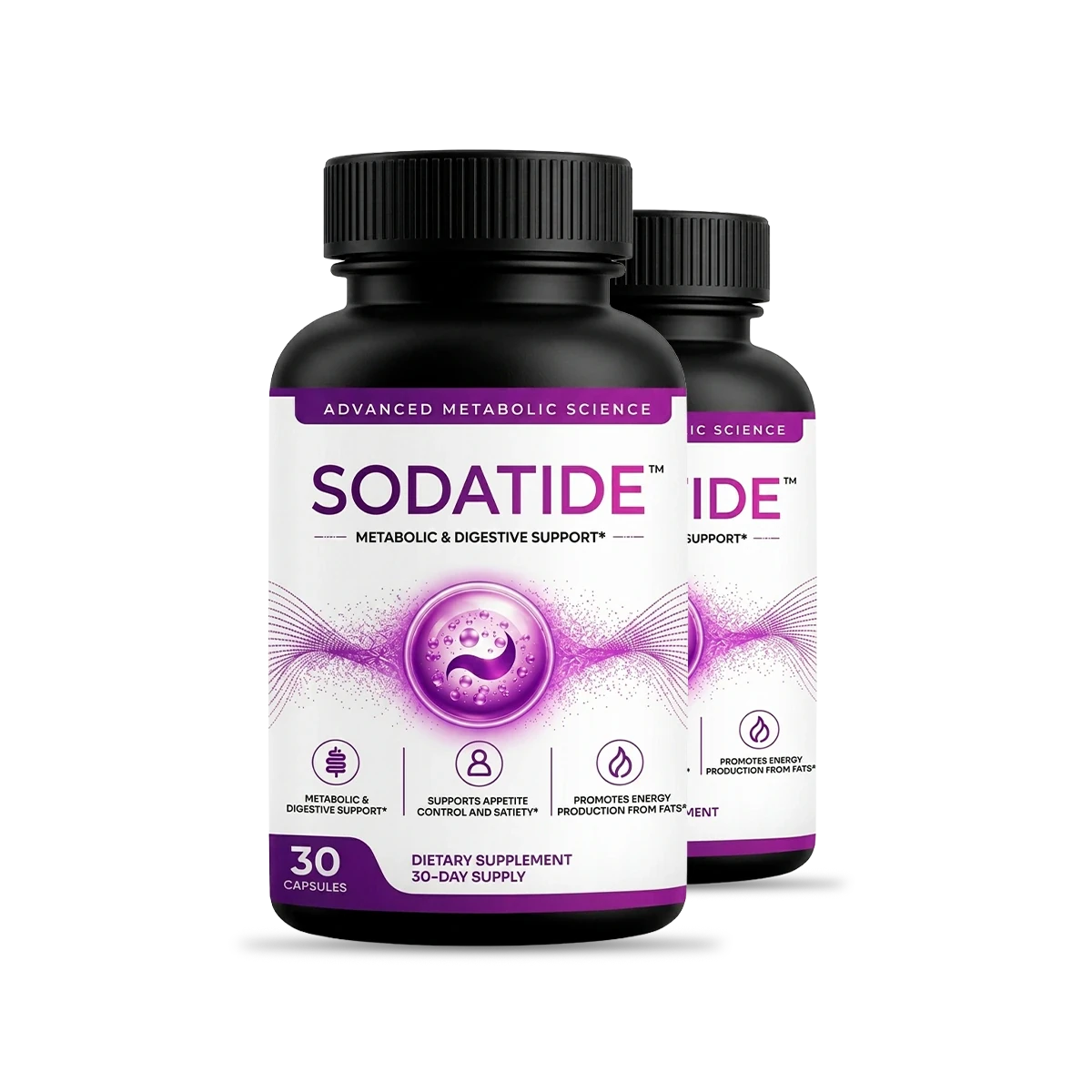
What it cannot do is reproduce a trial. The gap is an order of magnitude and no wording closes it, which is why the SodaTide ingredients page prints the trial doses in full rather than describing the ingredient in adjectives.
The practical conclusion this desk would draw: treat a fibre capsule as a nudge and a habit, judge it on digestion rather than on a scale, and if the numbers in this article are what you actually want, buy a tub of inulin by the gram and use it. That advice costs this desk a sale and it is still the right advice.
What a useful inulin label would print
- Grams per serving. One figure, and every trial in this article becomes applicable in ten seconds.
- Which inulin. Native long-chain, oligofructose, or an enriched mix. The three behave differently and one of the three failed to raise bifidobacteria in a screening study.
- The source. Chicory is the usual one and agave, Jerusalem artichoke and blue agave all appear. The trials cited here used chicory.
- Servings per container. Turns a price into a cost per gram, which is the only way two fibre products can honestly be compared.
- A tolerance note. A sentence saying that gas in the first fortnight is expected would prevent a great many abandoned bottles.
None of those five is exotic and none of them is a trade secret. Every serious fibre powder on the market prints the first and the fourth as a matter of course, because a powder sold by the gram cannot avoid it. A capsule can, and the difference is a labelling decision rather than a manufacturing one.
The practical consequence for a shopper is worth stating bluntly: when a fibre product prints a gram figure, you are being invited to compare it with the literature. When it prints only a name, you are being asked to take the formula on trust. Both happen constantly in this category, and knowing which one you are looking at is most of the skill in reading these labels at all.
Wind and bloating in the first week or two are what fermentation produces, and the tolerance studies find it settles. Taking the capsule with the full glass of water the label asks for, before a meal, is the gentlest way to start.
References
- A double-blind placebo-controlled study to establish the bifidogenic dose of inulin in healthy humans, by Kolida S, Meyer D, Gibson GR (Eur J Clin Nutr 2007;61(10):1189-95; PMID 17268410) · open the PubMed record
- The capacity of nondigestible carbohydrates to stimulate fecal bifidobacteria in healthy humans: a double-blind, randomized, placebo-controlled, parallel-group, dose-response relation study, by Bouhnik Y, Raskine L, Simoneau G, et al (Am J Clin Nutr 2004;80(6):1658-64; PMID 15585783) · open the PubMed record
- The effects of chicory inulin-type fructans supplementation on weight management outcomes: systematic review, meta-analysis, and meta-regression of randomized controlled trials, by Reimer RA, Theis S, Zanzer YC (Am J Clin Nutr 2024;120(5):1245-1258; PMID 39313030) · open the PubMed record
- Effects of inulin-type fructans on appetite, energy intake, and body weight in children and adults: systematic review of randomized controlled trials, by Liber A, Szajewska H (Ann Nutr Metab 2013;63(1-2):42-54; PMID 23887189) · open the PubMed record
- Effects of oligofructose on appetite profile, glucagon-like peptide 1 and peptide YY3-36 concentrations and energy intake, by Verhoef SP, Meyer D, Westerterp KR (Br J Nutr 2011;106(11):1757-62; PMID 21679485) · open the PubMed record
- Expert consensus document: The International Scientific Association for Probiotics and Prebiotics (ISAPP) consensus statement on the definition and scope of prebiotics, by Gibson GR, Hutkins R, Sanders ME, et al (Nat Rev Gastroenterol Hepatol 2017;14(8):491-502; PMID 28611480) · open the PubMed record