SodaTide Official Website › Blog › What A Pilot Study Can Prove
Forty Volunteers, Three Months: What A Pilot Study Can And Cannot Prove About A Probiotic
The best-documented human study behind the probiotic strain SodaTide's own sales page mentions in passing enrolled forty people and calls itself a proof-of-concept. That phrase means something specific in research methodology, and it is worth knowing what before treating any headline finding as settled.
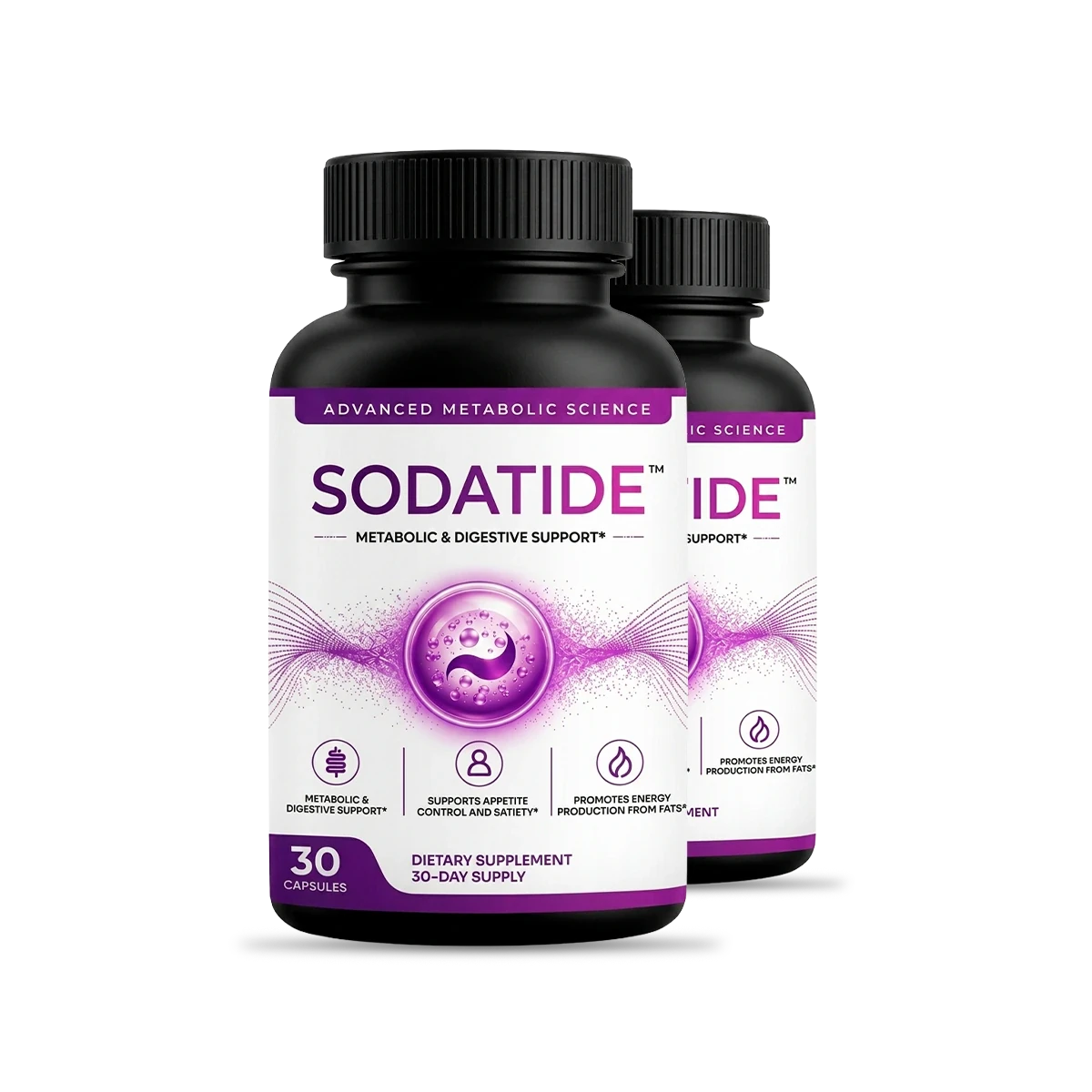
- A methodology paper on planning pilot studies defines them as feasibility and effect-size exercises meant to inform a later, adequately powered trial — not as confirmatory evidence on their own.
- The human Akkermansia muciniphila trial enrolled 40 volunteers, 32 completed it, and its own authors call it a proof-of-concept exploratory study.
- In that trial, insulin sensitivity and cholesterol changes reached statistical significance; body weight change did not (p=0.091).
- A separate, larger trial of a different named strain — Lactobacillus gasseri SBT2055 — enrolled 87 adults in a multicenter, double-blind, randomized, placebo-controlled design, then was followed by a 210-person dose-ranging study.
- Neither trial studied an unnamed “probiotic blend,” which is the actual wording on this label.
Two words on a trial abstract that change what it means
“Pilot” and “proof-of-concept” are not marketing softeners. They are methodological labels that researchers attach to a study on purpose, and they tell a reader something specific about what the authors themselves believe the data can support. A trial that calls itself a pilot is announcing, in its own words, that it was not built to be the last word on the question it asks.
Moore and colleagues, writing specifically about how pilot studies should be planned and read in clinical and translational research, make a point worth sitting with: the phrase “pilot study” gets applied loosely to almost any small or underfunded project, which is exactly why a rigorous definition matters. Their own definition ties a pilot to a specific purpose — gathering preliminary support, testing feasibility, and estimating an effect size precisely enough to calculate the sample size a later, adequately powered trial will need. A pilot study, done well, is a stepping stone toward an answer. It is built into the process specifically because it is not supposed to be the answer itself.
What a pilot study is for, and what it isn't
Put plainly, a pilot study is for three things: checking whether an intervention is safe and tolerable in a small group before scaling up, checking whether the study procedures themselves work in practice — recruitment, adherence, measurement — and producing a first estimate of how large an effect might be, so a follow-up trial can be sized correctly. It is not, on its own, meant to establish that an effect is real in the way a larger, pre-registered, adequately powered confirmatory trial can.
That distinction matters enormously for how a single small trial gets used afterward. A positive result in a pilot is a reason to run the bigger trial, not a substitute for it. A modest or null result in a secondary outcome of a pilot is informative about where to look next, not proof that an effect does not exist. Sample sizes in pilot studies are typically chosen for feasibility, not statistical power, which means a pilot is frequently underpowered to detect anything but a fairly large effect, and a numerically encouraging but non-significant secondary finding is exactly what that kind of design is expected to produce sometimes, regardless of whether a true effect exists.
Case A: forty volunteers, three months, Akkermansia
SodaTide's sales page names Akkermansia muciniphila in passing while explaining how the product is meant to work, and the human evidence behind that organism is genuinely one study. Depommier and colleagues designed a randomized, double-blind, placebo-controlled pilot study — the paper's own words, in its own abstract — in overweight or obese, insulin-resistant volunteers. Forty were enrolled; thirty-two completed the trial, a dropout rate worth noting on its own. The stated primary endpoints were safety, tolerability and metabolic parameters; gut barrier function and microbiome composition were secondary outcomes.
Daily oral supplementation with 10 billion Akkermansia muciniphila cells, either live or pasteurized, for three months was reported as safe and well tolerated — itself a legitimate and useful pilot-study finding. Beyond that, the results split by outcome and by significance in a way a headline rarely preserves. Compared with placebo, pasteurized Akkermansia improved insulin sensitivity by about 28.6% (p=0.002) and reduced insulinemia by about 34% (p=0.006) and total cholesterol by about 8.7% (p=0.02) — all statistically significant at conventional thresholds. Body weight fell by roughly 2.3 kg compared with placebo, but that change carried a p-value of 0.091, which is not significant at the usual 0.05 threshold; fat mass and hip circumference changes were similarly short of significance. The paper's own conclusion is careful about this: it calls itself a proof-of-concept study and frames its result as showing safety, tolerability and improvement in several metabolic parameters — not as demonstrating weight loss.
None of that makes the trial unimportant. A safety signal and a set of statistically significant metabolic findings from a first human trial of a novel organism is exactly the kind of result that justifies a bigger, confirmatory study. What it does not support is treating the weight or fat-mass numbers as an established effect, because the paper's own statistics say they were not distinguishable from chance at the sample size available.
Case B: eighty-seven adults, then two hundred and ten
A useful contrast sits elsewhere on this same site's ingredients page: the trial history of Lactobacillus gasseri SBT2055, a different named probiotic strain the seller's page also touches on. Kadooka and colleagues' first trial was not a pilot by name or design. It was a multicenter, double-blind, randomized, placebo-controlled intervention trial in eighty-seven adults with a defined higher body mass index and visceral fat area, split into an active group of forty-three and a control group of forty-four, each drinking 200 g of fermented milk daily for twelve weeks. Abdominal fat area was measured directly by CT scan rather than estimated. The active group showed a statistically significant 4.6% reduction in visceral fat area (p<0.01) and matching reductions in body weight, BMI, waist and hip measures; the control group showed none of these changes.
That result then got a genuine follow-up rather than being taken as final. A second trial asked a specific, narrower question the first one had not answered: would lower concentrations of the same strain still work? Two hundred and ten Japanese adults were randomly assigned to receive fermented milk with the strain at one of two lower colony counts or a control, again for twelve weeks. Visceral fat area fell by a statistically significant 8.5% and 8.2% at the two active doses; stopping the product for four weeks afterward attenuated the effect, itself a useful and specific finding about how long a benefit persists once supplementation stops.
Line up the two probiotic case studies and the contrast is the whole point of this article: one organism has a single 40-person pilot with mixed significance across its outcomes; the other has an 87-person randomized controlled trial followed by a purpose-built 210-person dose-ranging trial that tested a specific follow-up question. Both are real, published, peer-reviewed findings. They are not the same kind of evidence, and a sales page that mentions both organisms in the same breath is not saying the same thing about each of them, whether it says so explicitly or not.
| Depommier 2019 (Akkermansia) | Kadooka 2010 & 2013 (L. gasseri SBT2055) | |
|---|---|---|
| Design label, in the paper's own words | “Proof-of-concept exploratory study” | “Randomized controlled trial,” then a follow-up RCT |
| Enrolled / completed | 40 enrolled, 32 completed | 87, then a separate 210-person trial |
| Primary endpoints | Safety, tolerability, metabolic parameters | Abdominal visceral fat area by CT |
| Statistically significant result | Insulin sensitivity, insulinemia, cholesterol | Visceral fat, weight, BMI, waist, hip |
| Not statistically significant | Body weight (p=0.091), fat mass, hip circumference | — (all listed outcomes reached significance) |
| Follow-up trial run? | Not yet published, as far as this site could find | Yes — a 210-person dose-ranging RCT |
Figures read from each paper's own abstract and results section.
What neither trial measured
Both trials are precise about identity in a way this label is not. Depommier's pilot tested a named organism, Akkermansia muciniphila, at a stated daily count of 10 billion cells, in one of two named forms — live or pasteurized. Kadooka's trials tested a named strain, Lactobacillus gasseri SBT2055, at stated colony counts per gram of fermented milk. The ISAPP consensus statement on prebiotics and, by extension, the wider probiotic field is explicit that this kind of specificity is not optional detail: health benefits in this literature are strain- and dose-dependent, and a finding attached to one named organism at one stated count does not transfer to a different or unnamed one by default.
SodaTide's label says “probiotic blend.” It does not name a genus, a species, a strain, or a colony count at the end of shelf life. This blog's earlier post on that exact gap covers why that closes off any direct comparison to a specific trial; this article adds the other half of the same problem. Even if the blend did name its organisms, a reader would still need to ask which kind of study backs each one — a 40-person safety-and-signal pilot, or a confirmatory randomized trial with a defined primary endpoint — before treating a cited study as settled evidence either way. Neither Depommier's pilot nor Kadooka's RCTs enrolled anyone taking a capsule that combines a probiotic blend with two additional fermentable fibers, which is itself one more variable neither trial was designed to isolate.
A short checklist for reading any cited study
The two case studies above suggest a short, portable checklist for reading any single study a supplement page cites, on this site or elsewhere, regardless of the specific ingredient involved.
- Read the study's own design label. “Pilot,” “proof-of-concept,” and “exploratory” are the authors telling a reader how much weight to put on the result, in their own words, in the abstract.
- Check enrolled versus completed. A meaningful gap between the two, as in Depommier's 40 enrolled and 32 completed, is worth knowing before treating the reported effect sizes as final.
- Separate primary from secondary endpoints. A trial is generally best powered to detect its stated primary outcome; a secondary or exploratory finding, significant or not, carries less statistical weight even when it is the one that ends up quoted on a sales page.
- Look for the actual p-value on the specific number being cited. Depommier's insulin sensitivity result and its body weight result came from the same trial and the same volunteers, and only one of them cleared conventional statistical significance.
- Ask whether a follow-up trial exists. Kadooka's second, larger, dose-ranging RCT is what turned an initial finding into a more durable one; a pilot with no published follow-up is still waiting for that step.
None of this is a reason to dismiss a pilot study's findings outright, and it is not the position this article is taking. A well-designed 40-person safety and effect-size pilot is a real contribution, exactly as Moore and colleagues describe. It is a reason to read the word “study” on a sales page as an invitation to find out which kind of study it was, rather than as a settled fact on its own.
Read the ingredients page for the rest of the citation trail
The ingredients page sets out what the label names and does not name for all three ingredients, with the trial doses and designs behind each one kept alongside the claim.
Order SodaTideOne capsule a morning · 30 per bottle
References
- Moore CG, Carter RE, Nietert PJ, Stewart PW. Recommendations for planning pilot studies in clinical and translational research. Clin Transl Sci. 2011;4(5):332-7. PMID 22029804. https://pubmed.ncbi.nlm.nih.gov/22029804/
- Depommier C, Everard A, Druart C, et al. Supplementation with Akkermansia muciniphila in overweight and obese human volunteers: a proof-of-concept exploratory study. Nat Med. 2019;25(7):1096-1103. PMID 31263284. https://pubmed.ncbi.nlm.nih.gov/31263284/
- Kadooka Y, Sato M, Imaizumi K, et al. Regulation of abdominal adiposity by probiotics (Lactobacillus gasseri SBT2055) in adults with obese tendencies in a randomized controlled trial. Eur J Clin Nutr. 2010;64(6):636-43. PMID 20216555. https://pubmed.ncbi.nlm.nih.gov/20216555/
- Kadooka Y, Sato M, Ogawa A, et al. Effect of Lactobacillus gasseri SBT2055 in fermented milk on abdominal adiposity in adults in a randomised controlled trial. Br J Nutr. 2013;110(9):1696-703. PMID 23614897. https://pubmed.ncbi.nlm.nih.gov/23614897/
- Gibson GR, Hutkins R, Sanders ME, et al. Expert consensus document: The International Scientific Association for Probiotics and Prebiotics (ISAPP) consensus statement on the definition and scope of prebiotics. Nat Rev Gastroenterol Hepatol. 2017;14(8):491-502. PMID 28611480. https://pubmed.ncbi.nlm.nih.gov/28611480/